Mt Hood Challenge 2026 brought health economics and diabetes simulation modelling to Padua
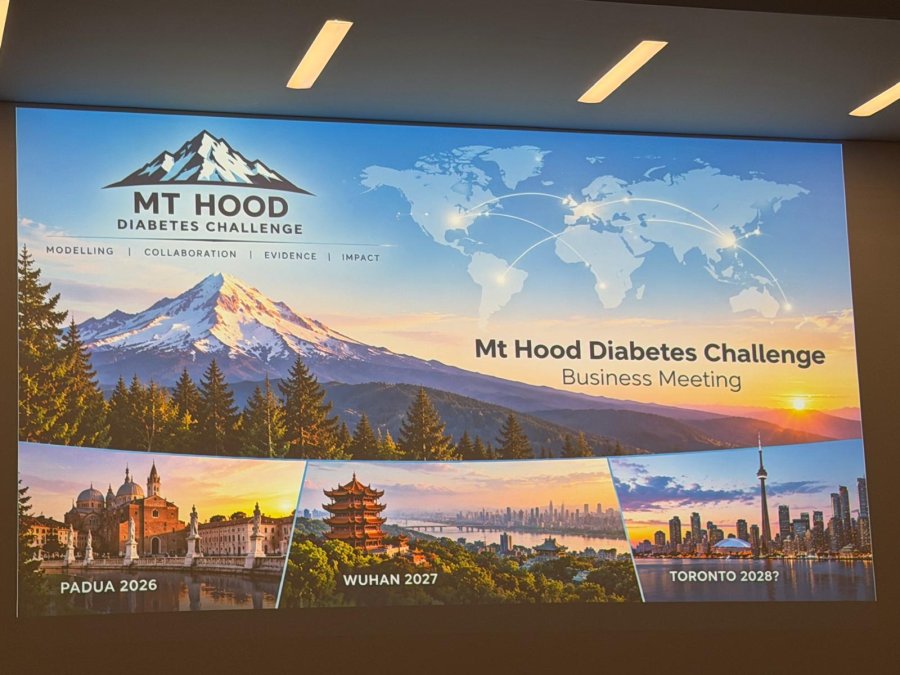
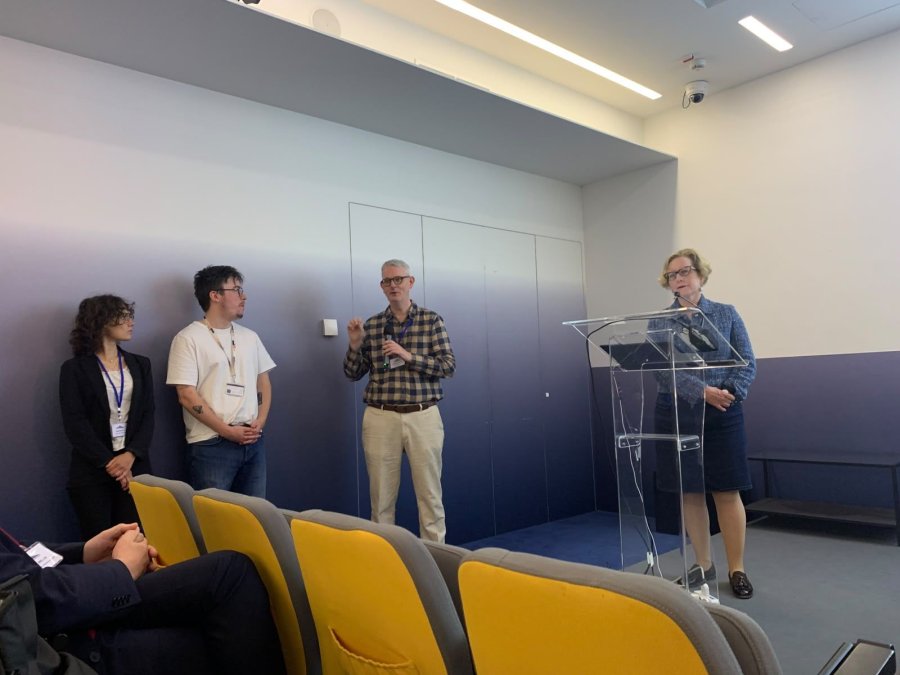
The Mt Hood Diabetes Challenge Conference 2026 took place in Padua, Italy, from 2 to 4 October, bringing together around 60 participants, including health economists, industry representatives, simulation modellers, clinicians, policy analysts and public-health researchers from around the world.
Organised around the theme of Health Economics and Simulation Modelling, the conference explored how modelling can support better-informed decisions in diabetes care, prevention and health policy. Professor Philip Clarke, the main organiser of Mt Hood Challenge 2026, led the conference, with support from the REDDIE team, including Prof. Amanda Adler and Gabriel Rogers. The University of Padova team, including Dr Enrico Longato, Dr Erica Tavazzi, Dr Sara Poletto, Sergio Gaiotti and Matteo Latino, supported the organisation and kindly hosted the event in Padua.
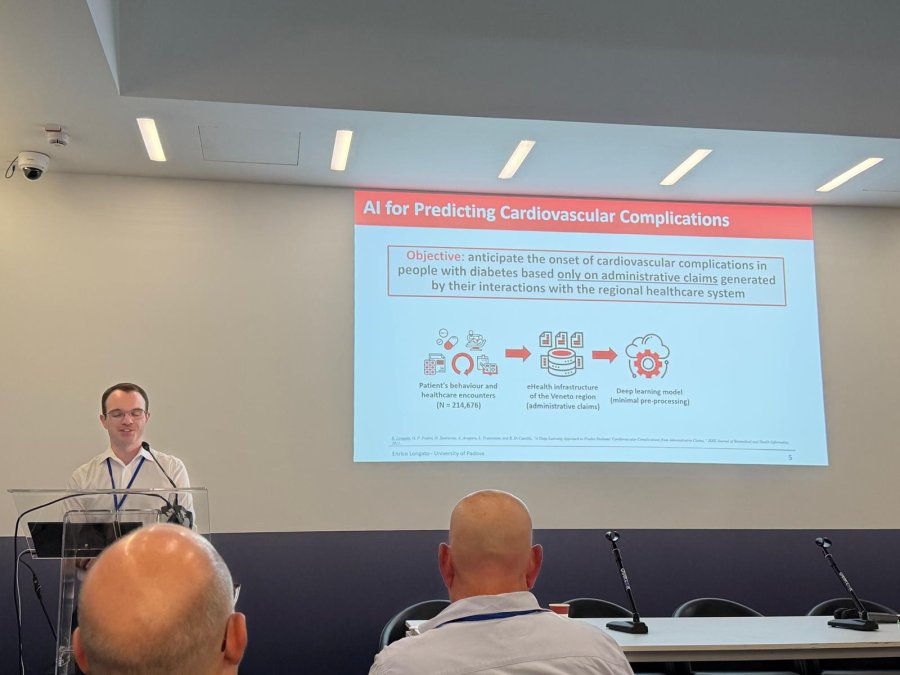
Discussions addressed the clinical and economic consequences of diabetes and its complications, comorbidity and multimorbidity, early detection, synthetic data and the future role of artificial intelligence in health economic modelling.
This year saw 4 modelling challenges: Reference Simulation Update, Diabetes, Aging, and Dementia Challenge, REDDIE Synthetic Data Challenge, Presymptomatic Screening in Type 1 Diabetes. These challenges allowed participating modelling groups to apply their models to common scenarios and compare their results. This process helps identify the impact of different assumptions, model structures and methods, while supporting greater transparency, comparability and methodological innovation in diabetes modelling.
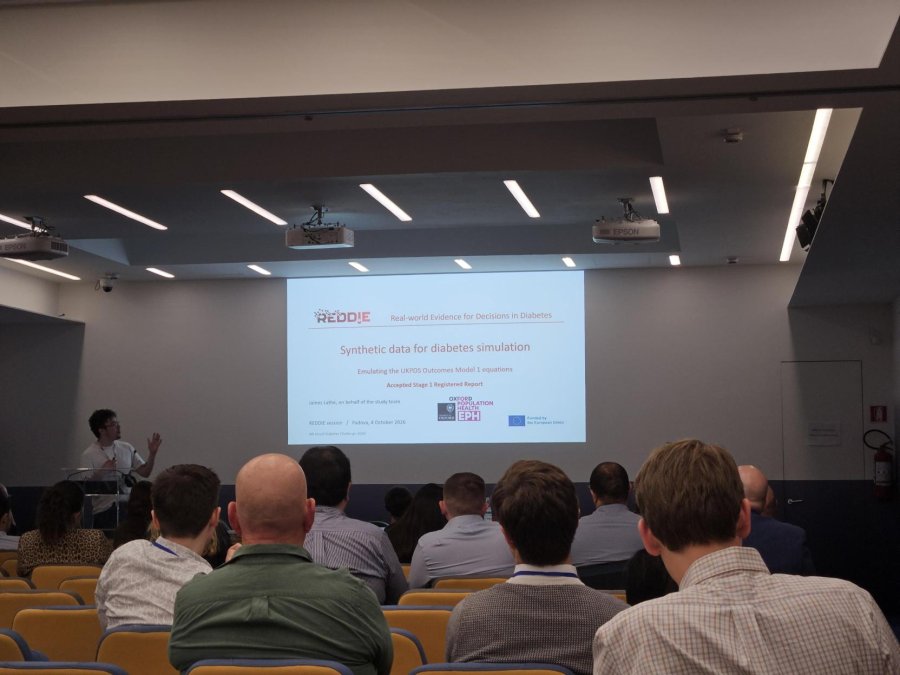
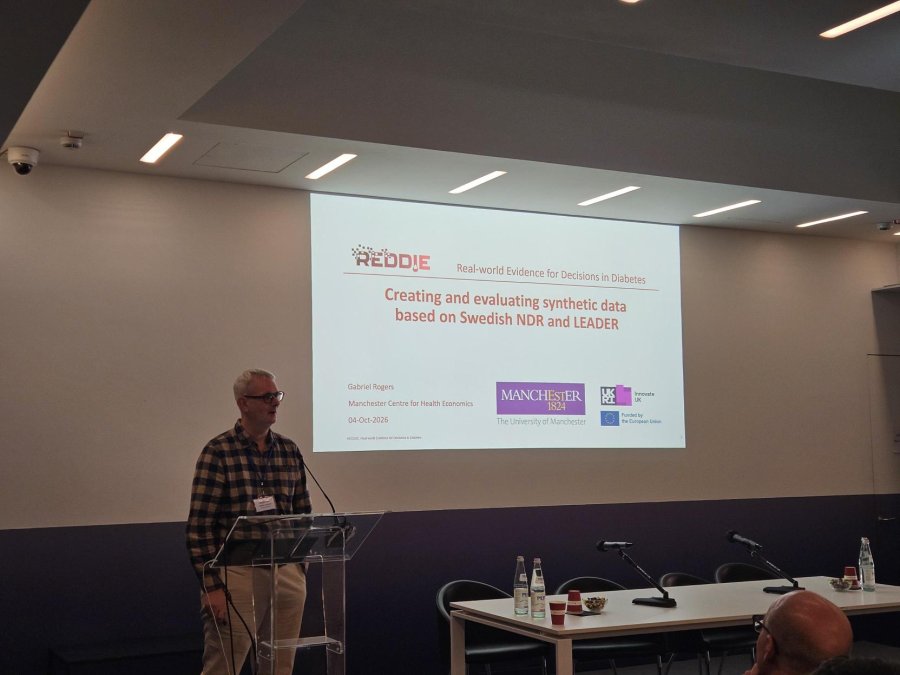
The REDDIE Synthetic Data Challenge explored how synthetic data can be used in diabetes simulation modelling, including applications related to clinical trials, registries and risk-equation replication. Nine modelling groups ran their models using synthetic data provided by REDDIE, after which the results were compared to examine how different models responded to the same data and to support discussion on data access, privacy and comparability.
A dedicated session on synthetic data for diabetes simulation was chaired by Professor Amanda Adler and featured contributions from Gabriel Rogers, James Lathe and Sara Poletto, representing the University of Manchester, the University of Oxford and the University of Padova. They presented findings from their work on synthetic data within the REDDIE project.
“Patients are often understandably reluctant to share their personal health data. Synthetic data can help address some of these concerns by enabling researchers to develop and test models without relying directly on identifiable patient information. The REDDIE Synthetic Data Challenge created a valuable opportunity to explore how this approach can be used in diabetes simulation modelling,” said Professor Amanda Adler.
By bringing together experts and modelling groups from different institutions and countries, Mt Hood 2026 reinforced the importance of transparent and comparable simulation models for understanding the long-term health and economic impact of diabetes and for supporting decisions that improve outcomes for people living with the disease.